

The Cultural Intelligence Gap: Why "Local" AI fails Global Markets
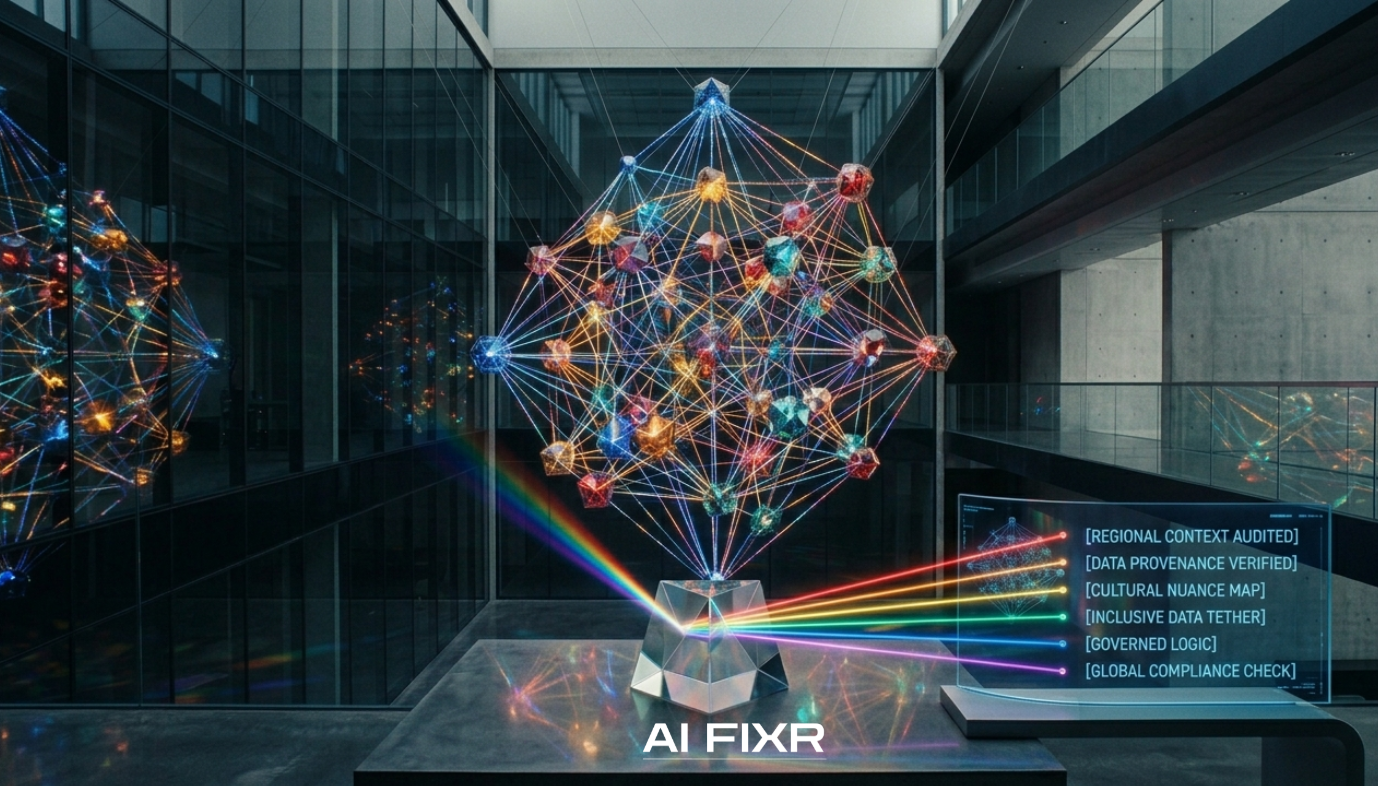
The Western Default Trap
By now, most enterprises have realised that AI bias isn't just an HR problem—it’s a technical one. But there is a second, quieter crisis brewing in the 2026 boardroom: The Cultural Intelligence (CQ) Gap.
Most Large Language Models are trained on a "Western Default" setting. They understand the nuances of a New York law firm or a London tech hub perfectly. But when those same models are asked to navigate a credit application in Lagos, a supply chain negotiation in Tokyo, or a customer service interaction in São Paulo, the "intelligence" begins to fracture.
The "Fixer" Angle: The Edge Case is the Market
In my 6 years leading AI at global brands, I’ve seen how "Global" initiatives often fail because they treat non-Western data as an "edge case."
In a global economy, there is no such thing as an edge case. If your AI cannot accurately process textured hair in a security filter, non-Western naming conventions in a CRM, or localised financial etiquette in a negotiation agent, you haven't built a "Global Intelligence." You’ve built a local tool that is a brand liability everywhere else.
Moving from Passive Diversity to Active Inclusion
To reclaim your global ROI, you need to move beyond "inclusive hiring" and start performing Inclusive Data Audits.
Verify Data Provenance: Is your training data representative of the markets you are actually in? If 90% of your data comes from the Global North, your AI will be "blind" to the needs of the Global South.
Audit the "Action Layer": When a Large Action Model (LAM) executes a task, does it understand local regulations and social norms? An automated "negotiator" that uses an aggressive Western style in a high-context Eastern market isn't "efficient"—it’s a relationship killer.
The "Fixr" Strategy: Build a Multifaceted Foundation. You don't need a different AI for every country; you need an architecture that understands cultural nuance as a core data variable, not a "patch" applied later.
The Bottom Line
Complexity is the enemy of scale, but Defaultism is the enemy of growth. If your AI room doesn't look like the world it’s trying to serve, you aren't innovating—you’re just scaling your own blind spots.
At AI FIXR, we don't just fix the code. We bridge the Cultural Intelligence gap so your AI can actually speak to the world.
Stop letting cultural blind spots limit your AI. Claim your AI Fix Session and make your projects truly global-ready.
