

AI FIXED: VOL 1 — The Philosophy (The "Out-of-the-Box" Delusion)
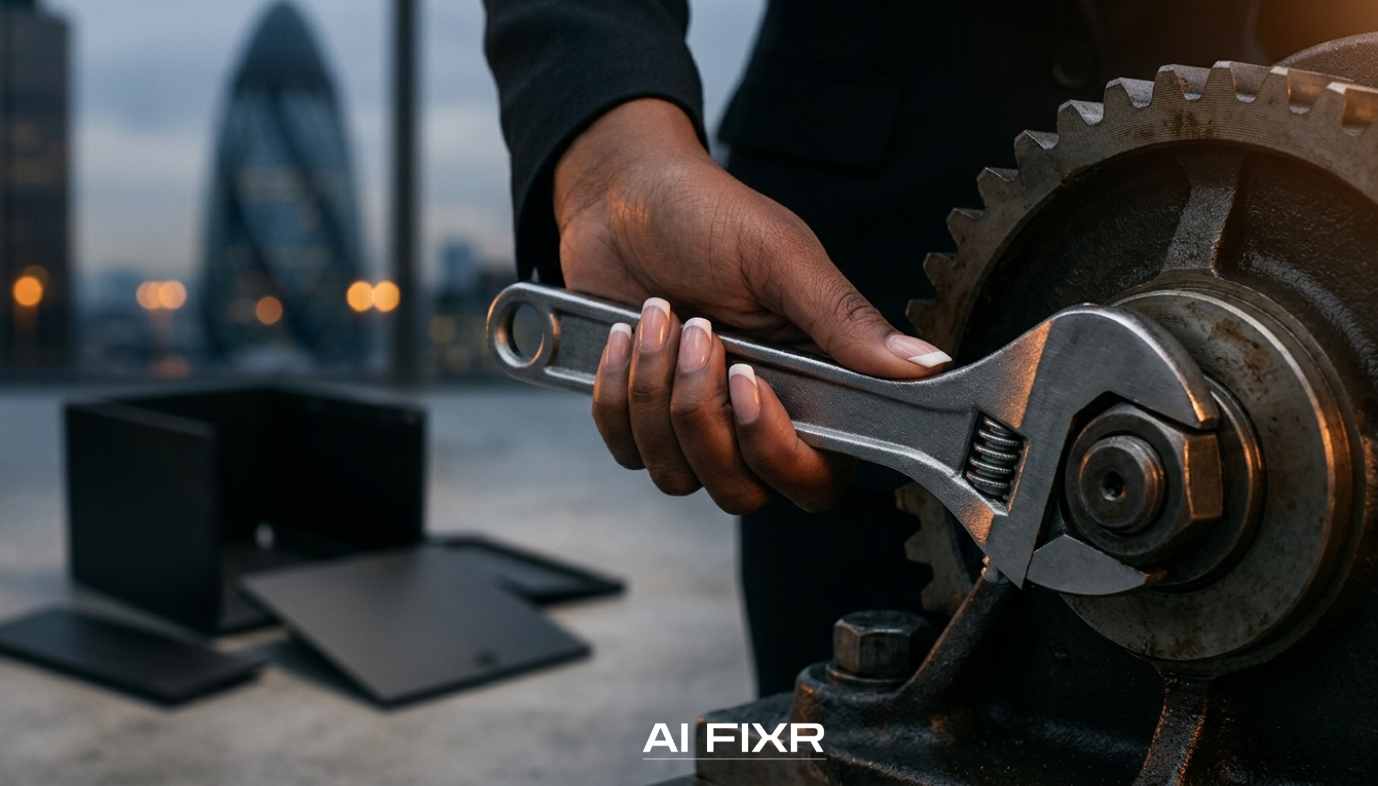
One thing I’ve seen a few times now: AI works “out of the box”... but not in a way that’s actually useful.
On paper, everything looks right. The tool is live. The budget was spent. The outputs are technically correct. But in practice? It doesn’t fit how the business actually works.
It’s like buying a high-performance engine and realising it doesn’t fit the chassis of the car you’re actually driving. It’s "Innovation" without "Infrastructure."
The "Correct" Output that No One Uses
I’ve walked into boardrooms where the AI was technically "functioning." It was generating reports, summarising data, and answering queries. But the teams were still reverting to their old, manual spreadsheets.
Why? Because the AI hadn't been calibrated for the friction of the real world.
The outputs were too generic. The tone was off. It didn't account for the specific API quirks of their legacy systems. It was a "solution" that created more work than it saved.
The Repair: Precision over Replacement
What usually happens next is where the real work begins. The "Fix" isn't about replacing the tool, it’s about heavy customisation.
To make AI work, we have to stop looking at it as a finished product and start treating it as a raw component that needs:
Refining Outputs: Stripping away the "AI-fluff" and forcing the model to speak the specific language of the industry.
Adapting to Real Workflows: Plugging the AI into the actual sequence of how a human completes a task, rather than asking the human to change for the machine.
Shaping the Interaction: Tuning the "API connectivity" so the data flows silently between departments without getting "stuck" in a dashboard no one checks.
It’s Fixed.
That’s when it stops being “AI that exists” and starts being something people actually rely on.
Out-of-the-box is rarely the end state. It’s just the starting point.
FIXR FINAL THOUGHTS
In this series, I’m going to share real life stories of how I took these "technically correct" failures and turned them into operational infrastructure. No "glowy blue" sci-fi tropes, just the grit of making things work.
